
Botox Therapy for Migraine: How Does It Work and Who Can Get It?
Frequent migraines can be very disruptive. Headaches can last for hours, come with nausea and sensitivity to light or sound, and get in the way of daily activities.

Frequent migraines can be very disruptive. Headaches can last for hours, come with nausea and sensitivity to light or sound, and get in the way of daily activities.
For people with chronic migraine, one of the most widely studied preventive treatments is BOTOX® (onabotulinumtoxinA). BOTOX used for migraine therapy has a different purpose from its aesthetic use. In migraine, the main goal is to help reduce the frequency and impact of headaches.
How Does BOTOX Work for Migraine?
Migraine is linked to the activity of the nervous system that carries pain signals from the head and neck to the brain. OnabotulinumtoxinA works at the nerve endings by blocking the release of several substances involved in the pain process, such as CGRP (calcitonin gene-related peptide), substance P, and glutamate.
This effect can reduce the activity of sensory nerve endings and lower the pain signals sent on to the central nervous system. So the benefit of BOTOX in migraine does not come only from its muscle-relaxing effect.
Who Can Get BOTOX Therapy for Migraine?
The strongest evidence for onabotulinumtoxinA is for chronic migraine.
Because headaches have many causes, someone who often has headaches should not jump to the conclusion that they need BOTOX.
A doctor needs to evaluate the frequency of the headaches, the character of the pain, accompanying symptoms, medications used, and any previous history of migraine. The aim is to make sure the therapy given really fits the patient’s condition.
Where Is BOTOX for Migraine Injected?
The most widely studied technique is known as the PREEMPT Protocol.
In the standard protocol, 155 units of onabotulinumtoxinA are given at 31 sites across seven groups of head and neck muscles. These areas include:
- Around the eyebrows (corrugator),
- Between the eyebrows (procerus),
- Forehead (frontalis),
- Temples (temporalis),
- Back of the head (occipitalis),
- Back of the neck (cervical paraspinal), and
- Neck to shoulders (trapezius).
In certain conditions, the doctor may add sites based on the pain pattern, or follow-the-pain. In PREEMPT, the total dose can reach 195 units at 31-39 sites. The European Headache Federation guideline also recommends giving 155-195 units using the PREEMPT protocol at an interval of about 12 weeks.
Why Does the Injection Reach the Back of the Head, Neck, and Shoulders?
This is one of the questions that comes up quite often.
Migraine is not only related to the forehead or temple areas that hurt. The migraine pain system also involves the trigeminal nerve and the sensory nerves from the cervical area, or neck.
These nerve endings are spread across many tissues of the head and neck. By blocking the activity of certain sensory nerve endings, onabotulinumtoxinA can reduce the number of pain signals sent to the brain. That is why migraine treatment sites can be spread from the forehead to the shoulders.
Are the BOTOX Migraine Sites the Same for Everyone?
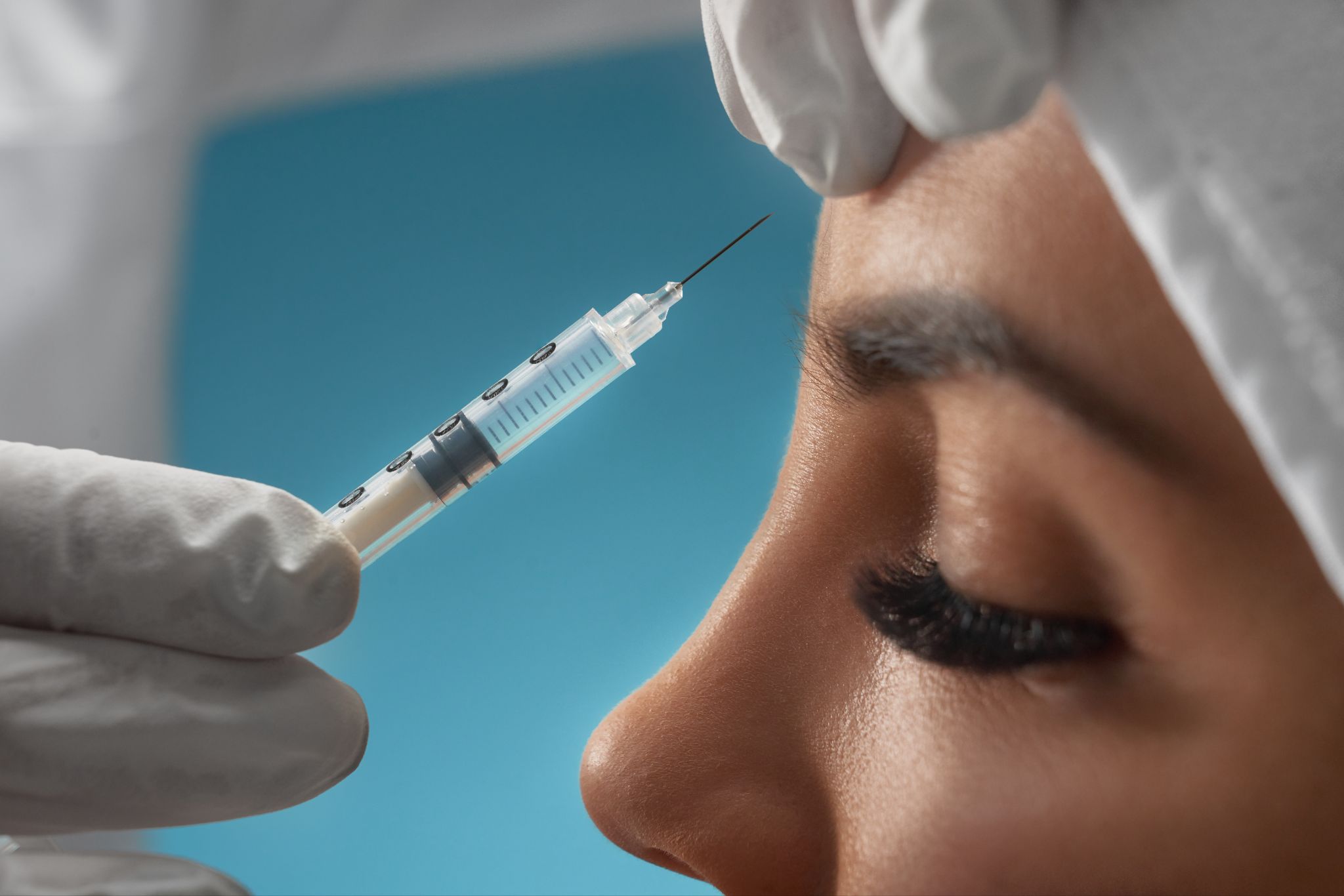
PREEMPT is the basis because this protocol has strong clinical evidence.
However, the doctor still needs to pay attention to each patient’s anatomy and pattern of complaints. Some patients feel their symptoms mostly around the eyebrows and forehead, while others have more pain at the back of the head, neck, or shoulders.
The PREEMPT protocol includes the concept of follow-the-pain, which means additional doses in certain areas according to the pain pattern. But adjusting the therapy must still take into account the protocol, anatomy, previous response to therapy, and the risk of side effects.
For this reason, mapping the migraine pattern before the procedure is an important part of the consultation.
How Effective Is BOTOX for Chronic Migraine?
The effectiveness of onabotulinumtoxinA was studied in the large clinical program PREEMPT 1 and PREEMPT 2.
A pooled analysis of 1,384 adults with chronic migraine showed that after 24 weeks, the number of headache days fell by an average of about 8.4 days compared with baseline in the group that received onabotulinumtoxinA. In the placebo group, the reduction was about 6.6 days. The difference was statistically significant.
A follow-up study over 56 weeks also showed continued improvement in the number of headache days, migraine days, and days with moderate to severe headache in patients who received repeated therapy.
However, results can differ from person to person. The goal of therapy does not always mean the migraine must disappear 100%, but rather to reduce its frequency, intensity, and impact on daily life.
How Often Is BOTOX for Migraine Given?
In the PREEMPT protocol, therapy is usually given at an interval of about 12 weeks.
The response is then evaluated from one cycle to the next. Patients can note down:
- How many days they have a headache in a month,
- How severe the attacks are,
- How long they last, and how often they need medication during an attack.
This simple note, or headache diary, is very helpful for the doctor in assessing the response to therapy.
Is BOTOX for Migraine the Same as BOTOX for Wrinkles?
The substance used can be the same, but the purpose, dose, number of sites, and injection technique are different.
Aesthetic BOTOX is usually meant to regulate the activity of certain muscles so that expression lines are reduced. In migraine therapy, on the other hand, the injections follow the anatomical map of the head and neck that has been studied in clinical research.
For this reason, migraine therapy requires an assessment of the headache pattern as well as an understanding of anatomy and injection technique.
Can BOTOX Cure Migraine?
BOTOX is a preventive treatment, not a guarantee that migraine will go away permanently.
The goal is to help patients have fewer headache days and less impact of migraine on their activities and quality of life. The PREEMPT studies also found improvement in measures of headache impact and quality of life in patients who received onabotulinumtoxinA.
Migraine Therapy with BOTOX Consultation at GLOSKIN
For patients with recurring migraines or headaches that are becoming more frequent, the first step is to have a consultation and evaluation first.
The doctor will assess the headache pattern, the areas that often hurt, previous treatment history, and the anatomy of the head and neck, and decide whether migraine therapy with BOTOX suits the patient’s condition. The therapy can then be planned in a measured way, still following the available scientific evidence and treatment protocols.
Consult a GLOSKIN doctor first to find out whether BOTOX therapy for migraine suits your condition, dear Friend.
Scientific references
Blumenfeld AM, et al. Method of Injection of OnabotulinumtoxinA for Chronic Migraine: A Safe, Well-Tolerated, and Effective Treatment Paradigm Based on the PREEMPT Clinical Program. Headache. 2010.
Dodick DW, et al. OnabotulinumtoxinA for Treatment of Chronic Migraine: Pooled Results From the PREEMPT Clinical Program. Headache. 2010.
Burstein R, et al. Mechanism of Action of OnabotulinumtoxinA in Chronic Migraine: A Narrative Review. Headache. 2020.
Bendtsen L, et al. Guideline on the Use of OnabotulinumtoxinA in Chronic Migraine: A Consensus Statement From the European Headache Federation. Journal of Headache and Pain. 2018.
Discussion
Comments & Questions
Share your comments or questions about this article.